How To Calculate Calories Burned On A Treadmill (The Accurate Way)
Stop guessing your calorie burn. Learn exactly how to calculate calories burned on a treadmill using the gold-standard ACSM formula.
Unlike BMI, your body fat percentage actually tells you what your weight is made of. Use our body composition calculator based on Tape/Circumference Methods like the official U.S. Navy body fat calculator to estimate your lean mass and fat mass without expensive DEXA scans.
Last updated:
Follow the exact steps to get your result instantly and privately.
You will need a flexible measuring tape. Measure in inches or centimeters, but be as precise as possible, as this replaces a skinfold caliper calculator.
Measure your neck (just below the larynx) and your waist (at the navel). For women, also measure the hips at the widest point.
We apply the Navy's logarithmic equations to separate your fat weight from your lean muscle weight to give an accurate body composition.
You will need a flexible measuring tape. Measure in inches or centimeters, but be as precise as possible, as this replaces a skinfold caliper calculator.
The sophisticated logarithmic equations utilized in this body composition calculator were originally developed by the Naval Health Research Center (NHRC). The U.S. Navy required a highly scalable, rapid, and reasonably accurate method to physically screen hundreds of thousands of active-duty personnel without relying on expensive, stationary equipment like DEXA scanners or hydrostatic weighing tanks. This method is grounded in well-established human biology and anthropometrics: subcutaneous and visceral fat inherently accumulates in highly predictable patterns across the human body—primarily around the abdominal region (waist) for men, and the gluteofemoral region (hips and thighs) for women. Conversely, neck circumference has been shown in clinical data to correlate remarkably well with an individual's overall lean body mass. By comparing the ratios of these specific circumferences against total body height, the Navy's complex logarithmic formulas can effectively isolate fat mass from lean muscle mass. For the average individual measuring at home, this tape measure approach provides an incredibly reliable and significantly more accessible alternative to a complex skinfold caliper calculator, often matching clinical methods within a highly acceptable 3-4% margin of error.
Men's Equation: 86.010 × log10(waist - neck) - 70.041 × log10(height) + 36.76
Women's Equation: 163.205 × log10(waist + hip - neck) - 97.684 × log10(height) - 78.387

*Note: To ensure strict mathematical precision, our calculator internally standardizes all user inputs (whether metric or imperial) into inches before executing these specific logarithmic functions.Using the men's equation: A male subject presenting a 34-inch abdominal circumference (waist), a 16-inch neck circumference, and a standing height of 70 inches (5'10") mathematically evaluates to approximately 16.8% body fat. This places him squarely within the 'Fitness' category for most standard age brackets, indicating a very healthy and sustainable body composition.


Evidence-Based Fitness
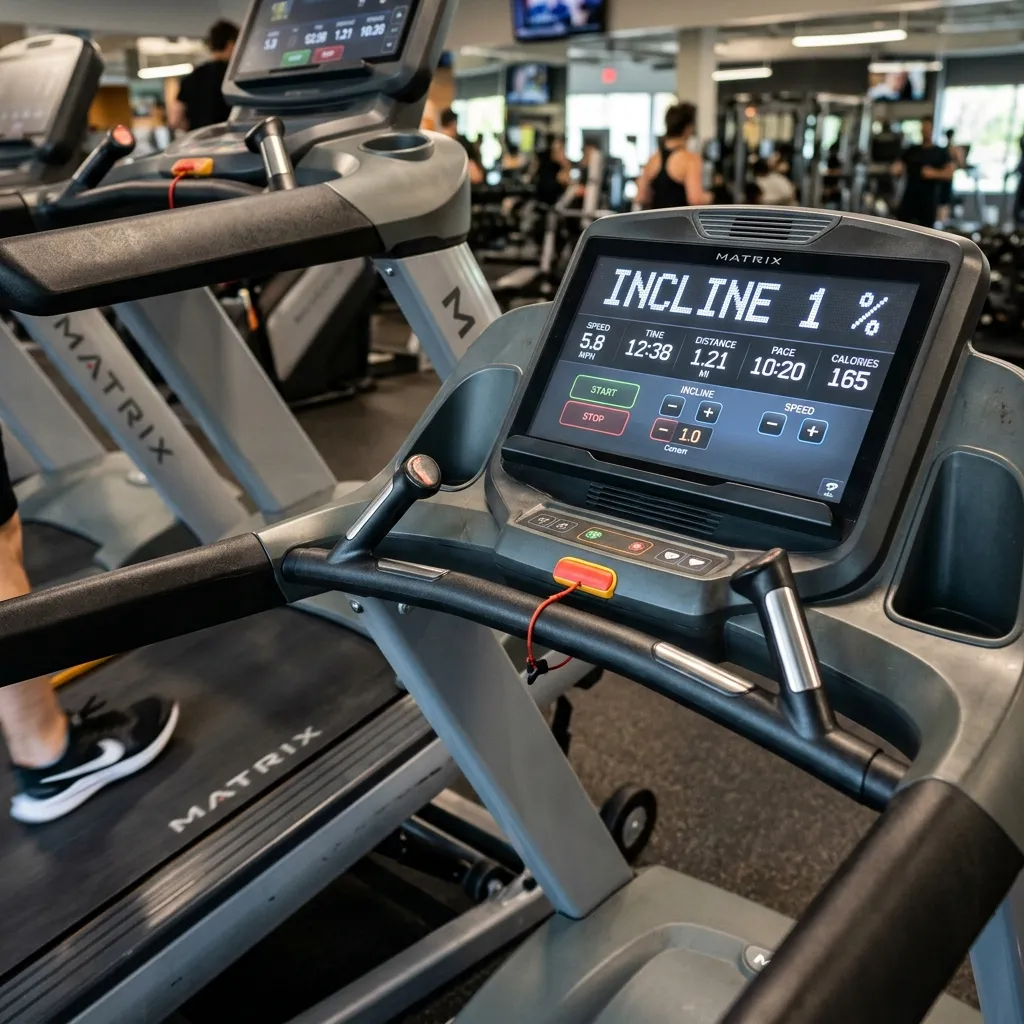
Stop guessing your calorie burn. Learn exactly how to calculate calories burned on a treadmill using the gold-standard ACSM formula.
Breaking down the exact calorie burn of the viral 12-3-30 treadmill workout and why it is so incredibly effective for weight loss.
Your treadmill display overestimates calorie burn by 15–20%. Here is the ACSM formula, how incline multiplies calories, and what the 12-3-30 actually burns.