How To Calculate Calories Burned On A Treadmill (The Accurate Way)
Stop guessing your calorie burn. Learn exactly how to calculate calories burned on a treadmill using the gold-standard ACSM formula.
Calories dictate your weight, but macronutrients dictate your body composition. Use our macro calculator to find the exact grams of protein, carbs, and fats you need to hit your specific goal, whether you are calculating macros for weight loss, maintenance calories, or macros for muscle gain.
Last updated:
Follow the exact steps to get your result instantly and privately.
We use the Mifflin-St Jeor equation to calculate your BMR and apply your activity level to find your maintenance calories calculator baseline.
We adjust your total calories based on whether you want to learn how to calculate macros for fat loss (deficit), maintain, or build muscle (surplus).
Choose a dietary preference (Balanced, High Protein, or Low Carb/Keto) to establish your ideal protein/carb/fat ratio. We split your calories into exact daily grams.
We use the Mifflin-St Jeor equation to calculate your BMR and apply your activity level to find your maintenance calories calculator baseline.
The foundation of any successful body transformation begins with thermodynamics—finding your total daily caloric target. However, once that baseline is established, we must execute the critical step of macronutrient partitioning. We achieve this by taking your total allotted calories and strategically distributing them across the three major macronutrients based on your specific dietary preferences (e.g., High Protein, Keto, or Balanced) and your ultimate physiological goal (fat loss vs. muscle hypertrophy). To translate these percentage-based ratios into actionable daily targets for your food scale, our macro calculator utilizes the immutable, scientifically-established energy density values of food: dietary Protein and dietary Carbohydrates both yield exactly 4 kilocalories of energy per gram, whereas dietary Fats are far more energy-dense, yielding 9 kilocalories of energy per gram. (Note: Alcohol, while not a primary macronutrient, yields 7 calories per gram, but is not factored into standard healthy macro splits). By applying these constant energy values, we precisely reverse-engineer your caloric percentages into the exact grams you need to track in your food logging app daily.
Daily Protein Target (grams) = (Total Daily Calories × Protein Percentage Target) ÷ 4 kcal/g
Daily Carbohydrate Target (grams) = (Total Daily Calories × Carbohydrate Percentage Target) ÷ 4 kcal/g
Daily Fat Target (grams) = (Total Daily Calories × Fat Percentage Target) ÷ 9 kcal/gLet's say your maintenance calories calculate to 2,000 kcal per day, and you select a classic 'High Protein Bodybuilding Split' (40% Protein / 30% Carbs / 30% Fats). The math works out as follows: You need 800 total calories derived from protein (800 ÷ 4 = exactly 200g of protein). You need 600 calories derived from carbohydrates (600 ÷ 4 = exactly 150g of carbs). Finally, you need 600 calories derived from dietary fats (600 ÷ 9 = approximately 67g of fat). Hitting these precise numbers guarantees you nail your 2,000 calorie target while optimizing muscle retention and hormone health.



Evidence-Based Fitness
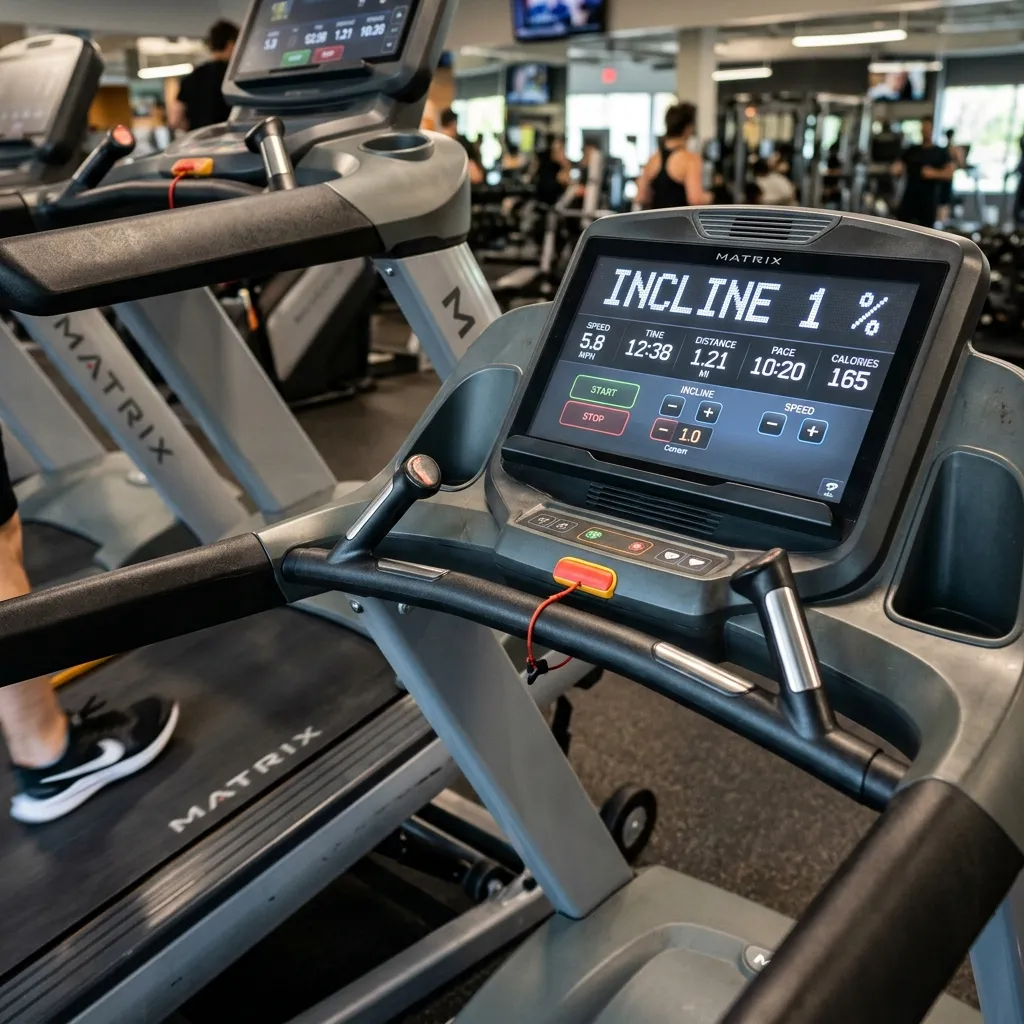
Stop guessing your calorie burn. Learn exactly how to calculate calories burned on a treadmill using the gold-standard ACSM formula.
Breaking down the exact calorie burn of the viral 12-3-30 treadmill workout and why it is so incredibly effective for weight loss.
Your treadmill display overestimates calorie burn by 15–20%. Here is the ACSM formula, how incline multiplies calories, and what the 12-3-30 actually burns.