How To Calculate Calories Burned On A Treadmill (The Accurate Way)
Stop guessing your calorie burn. Learn exactly how to calculate calories burned on a treadmill using the gold-standard ACSM formula.
Your Total Daily Energy Expenditure (TDEE) is the absolute number of calories you burn in a day. Use our maintenance calorie calculator to find your exact baseline. We use the clinical Mifflin-St Jeor equation combined with precise activity multipliers to give you exact targets for fat loss, muscle gain, or maintenance.
Last updated:
Explore our complete suite of health, fitness, and running calculators.
Follow the exact steps to get your result instantly and privately.
First, we calculate your Basal Metabolic Rate (BMR)—the calories you burn just staying alive. (See TDEE vs. BMR in the FAQs).
We use a rigorous multiplier (1.2 to 1.9) based on how physically demanding your job and training are, which accounts for your Non-Exercise Activity Thermogenesis (NEAT).
Once we have your TDEE, we provide scientifically-backed caloric targets for a 500-calorie deficit (cutting) or a 250-calorie surplus (bulking).
First, we calculate your Basal Metabolic Rate (BMR)—the calories you burn just staying alive. (See TDEE vs. BMR in the FAQs).
Calculating your Total Daily Energy Expenditure (TDEE) is a critical two-step mathematical process that reveals your true 'maintenance calories calculator' baseline. The foundation is your Basal Metabolic Rate (BMR), which represents the absolute minimum energy required to sustain vital organ functions at complete rest. However, you don't just sleep all day. To find your true daily burn, we must scale your BMR upward by multiplying it against a standardized Physical Activity Level (PAL) coefficient. This crucial multiplier accounts for every ounce of energy you expend outside of resting. This includes your deliberate, structured exercise (EAT - Exercise Activity Thermogenesis), the energy required to digest your meals (TEF - Thermic Effect of Food), and crucially, the hundreds of micro-movements you make throughout the day like walking, standing, and fidgeting (NEAT - Non-Exercise Activity Thermogenesis). It is imperative to be brutally honest and objective when selecting your activity level. Chronic overestimation of daily activity is the number one reason why people fail to lose weight when tracking macros, as it artificially inflates your TDEE output and leads to accidental overeating.
Sedentary (Desk job, remote worker, little to no structured exercise): BMR × 1.200
Lightly Active (Light exercise or casual sports 1-3 days/week): BMR × 1.375
Moderately Active (Moderate to intense exercise 3-5 days/week): BMR × 1.550
Very Active (Hard exercise or heavy sports training 6-7 days/week): BMR × 1.725
Extra Active (Demanding physical labor job combined with hard daily training): BMR × 1.900Assume your clinically calculated BMR is exactly 1,800 kcal. If you work a standard office job but consistently train moderately in the gym 4 days a week, you fall into the 'Moderately Active' tier. Your TDEE is calculated as 1,800 × 1.55 = 2,790 total kilocalories burned per day. To achieve a standard, healthy weight loss rate of approximately one pound of pure fat per week, you must create a sustained 500 kcal daily energy deficit. Therefore, your final daily caloric intake target would be strictly set to 2,290 kcal.




Evidence-Based Fitness
Stop guessing your calorie burn. Learn exactly how to calculate calories burned on a treadmill using the gold-standard ACSM formula.
Breaking down the exact calorie burn of the viral 12-3-30 treadmill workout and why it is so incredibly effective for weight loss.
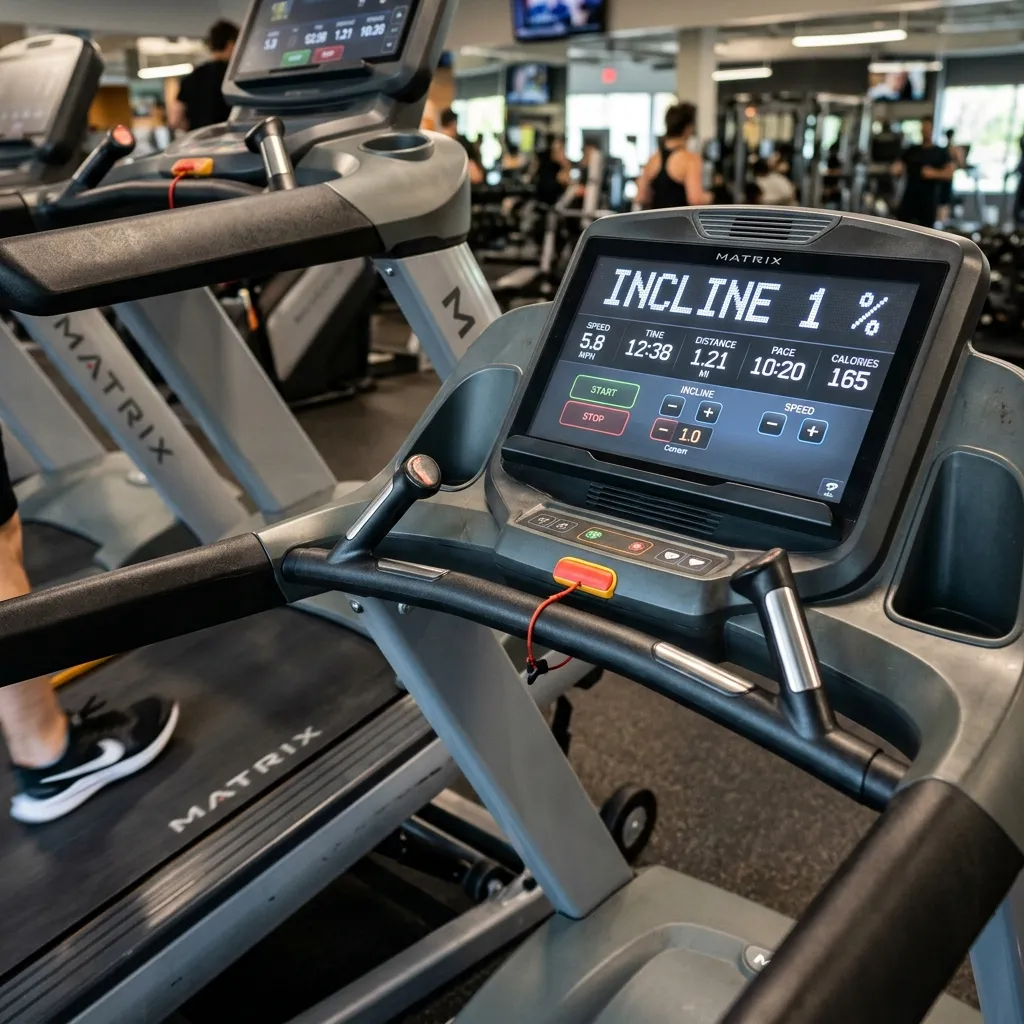
Your treadmill display overestimates calorie burn by 15–20%. Here is the ACSM formula, how incline multiplies calories, and what the 12-3-30 actually burns.